
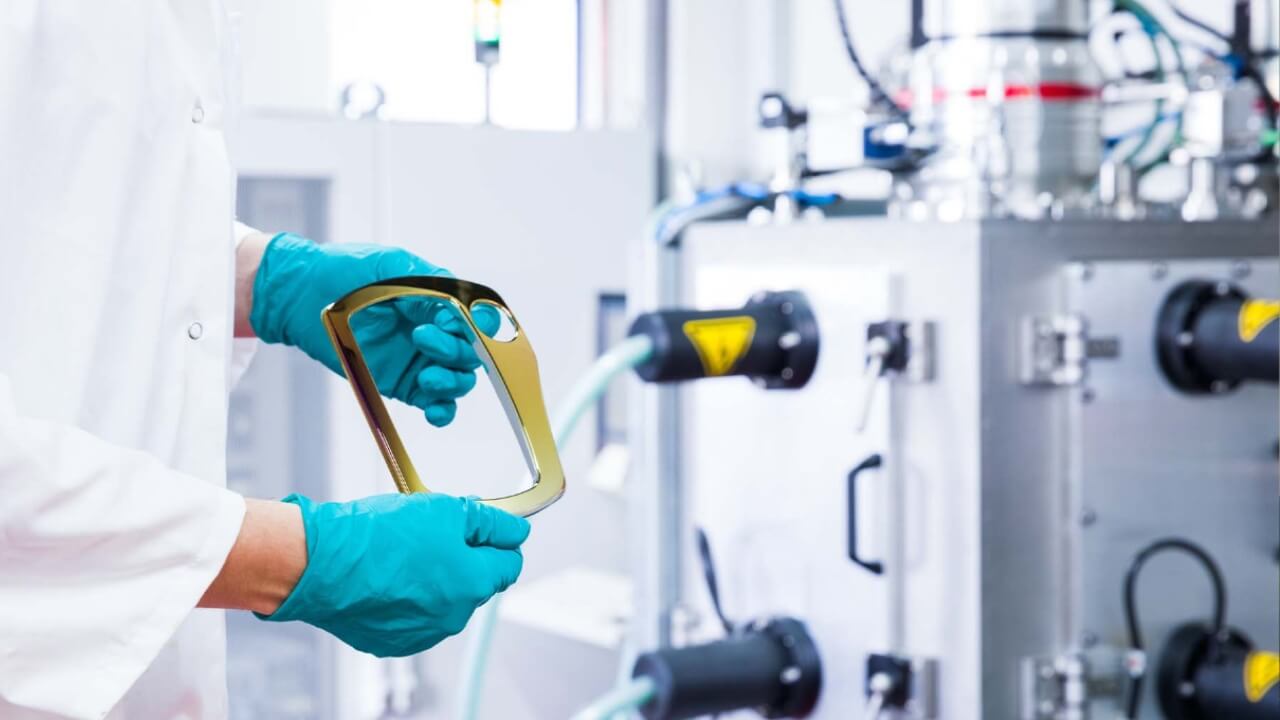
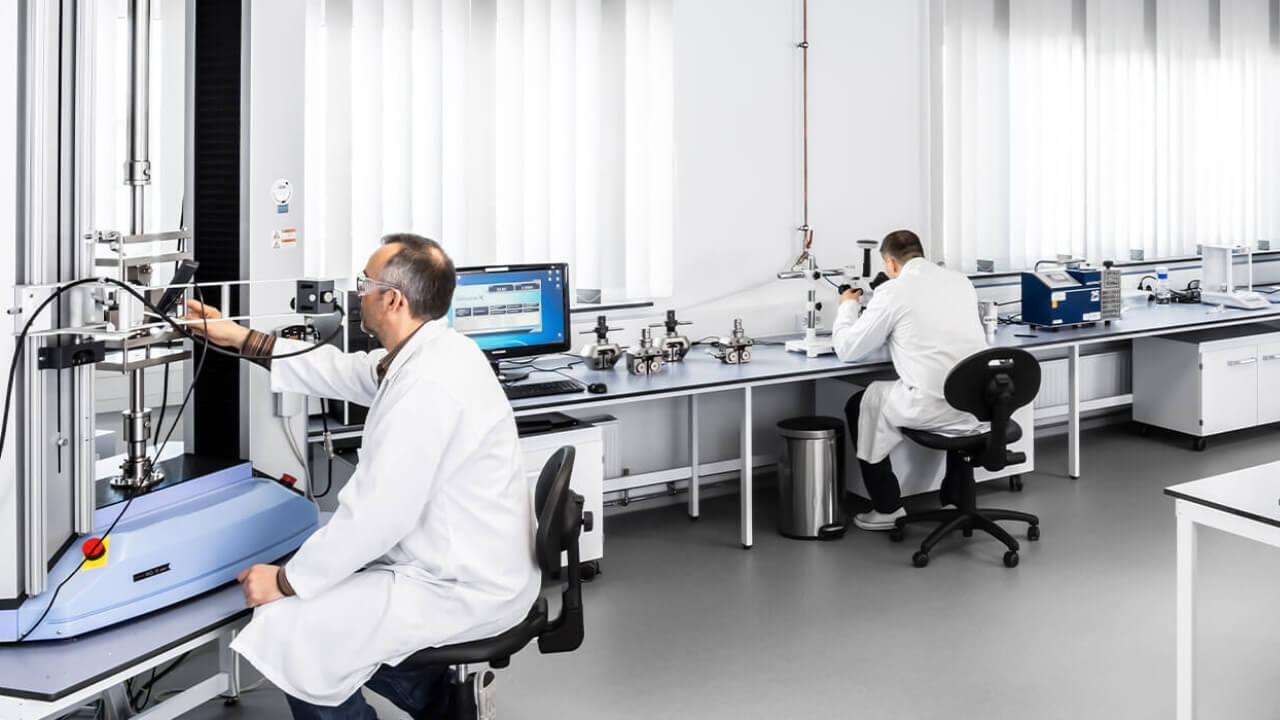



Organometallic precursors enable the targeted development of functional metal layers for industrial applications. The focus is on understanding process-structure-property relationships in order to optimize surfaces and tools in a targeted manner and to translate new coating systems into practical applications. In this way, they make an important contribution to the development of high-performance and cost-effective coating solutions.
Purified precursors of KIMW-F –
Because purity makes the difference
Research Sustainably processed, specifically applicable
Organometallic precursors such as molybdenum hexacarbonyl (CAS No. 13939-06-5) and tungsten hexacarbonyl (CAS No. 14040-11-0) are key starting materials for modern coating and materials technologies. They are used worldwide in industrial processes that require high-purity metallic layers, precisely controlled material structures, or high-performance catalysts. Particularly in processes such as chemical vapor deposition (CVD) or atomic layer deposition (ALD) and related coating technologies, these compounds serve as a reliable source of metal for the production of functional metallic layers.
As a specialized supplier, the non-profit KIMW Forschungs-GmbH provides high-purity organometallic precursors for industrial research, process development, and series production. Our products help companies establish stable coating processes, achieve reproducible material properties, and efficiently transfer new technologies into industrial applications.
Hexacarbonyls in use –
versatile and effective
Thanks to their high purity, well-defined chemical structure, and excellent vaporization properties, these metal carbonyl precursors are ideally suited for applications where reproducible processes and precise material properties are critical. Manufacturers across various high-tech industries use these materials to develop and produce high-performance components and to optimize production processes.
Among the most important fields of application is semiconductor technology, where organometallic precursors are used to deposit thin metal films and contact structures. Chemical engineering utilizes precursors, for example, in the development of specialized coatings or process innovations. Compounds such as molybdenum hexacarbonyl and tungsten hexacarbonyl also play an important role in catalysis, for example in the development of efficient catalysts for chemical reactions. Another significant application area is olefin production, where metal-based catalysts make a decisive contribution to the efficiency of petrochemical processes.
In addition, these precursors are also used in technologically demanding industries such as aerospace. There, they are used, among other things, for temperature- and wear-resistant metallic coatings that must withstand high mechanical and thermal stresses.
In the FAQ below, you will find answers to frequently asked questions about molybdenum hexacarbonyl, tungsten hexacarbonyl, and other organometallic precursors—ranging from chemical properties and handling to typical applications in semiconductor technology, chemical engineering, catalysis, olefin production, and aerospace applications.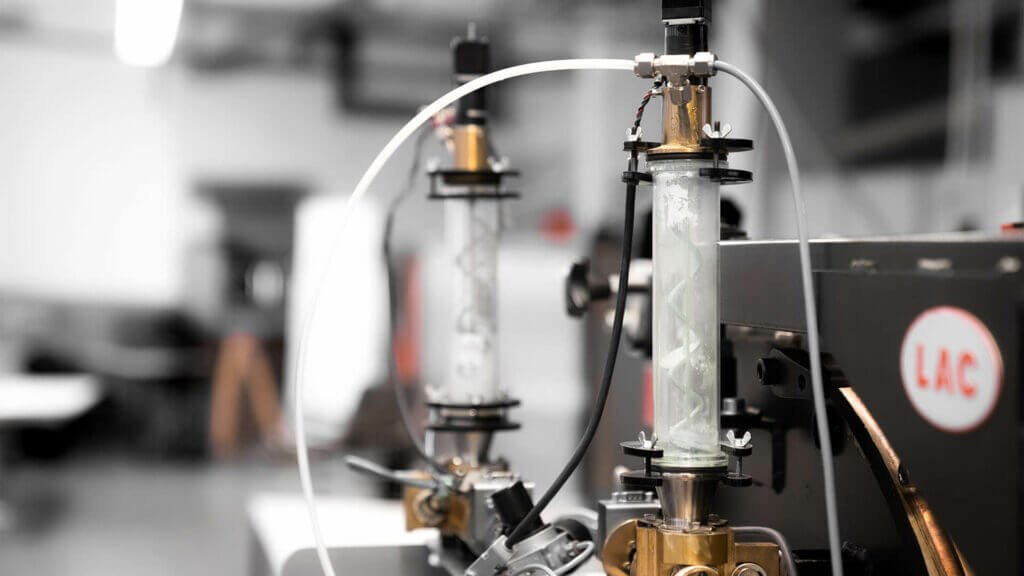
Metal carbonyls – expertise
from almost 100 years of experience
The manufacturing process for metal carbonyls was mentioned in technical literature in the 1930s to 1950s. Various sources reported on ways of producing the desired metal carbonyls with the corresponding yields. The use of so-called autoclaves is of decisive importance.
The reaction of metal chlorides to metal carbonyls is brought about by means of increased pressure and elevated temperatures. The development and manufacture of the corresponding autoclave technology was carried out by the KIMW research center after intensive development work. Lengthy and complex investigations of the reaction kinetics were necessary to ensure safe operation and achieve a high degree of purity (99.9%).
In particular, an understanding of the influence of reactor geometry and dynamic reaction control was developed, enabling a high degree of purification to be achieved. The KIMW research center now enables the short-term supply of purified metal hexacarbonyls for the European market.
Purified precursors –
More advantages, less risk

Very high degree of purity
Molybdenum hexacarbonyl (CAS number 13939-06-5) and tungsten hexacarbonyl (CAS number 14040-11-0) are purified by us in a special process. This achieves a purity level of 99.9 percent.

Fast availability
We guarantee very fast availability of our metal precursors. Once we receive your order with the desired delivery quantity, we will deliver the purified Carboyle to your desired address within just eight working days.

Purified in
Germany
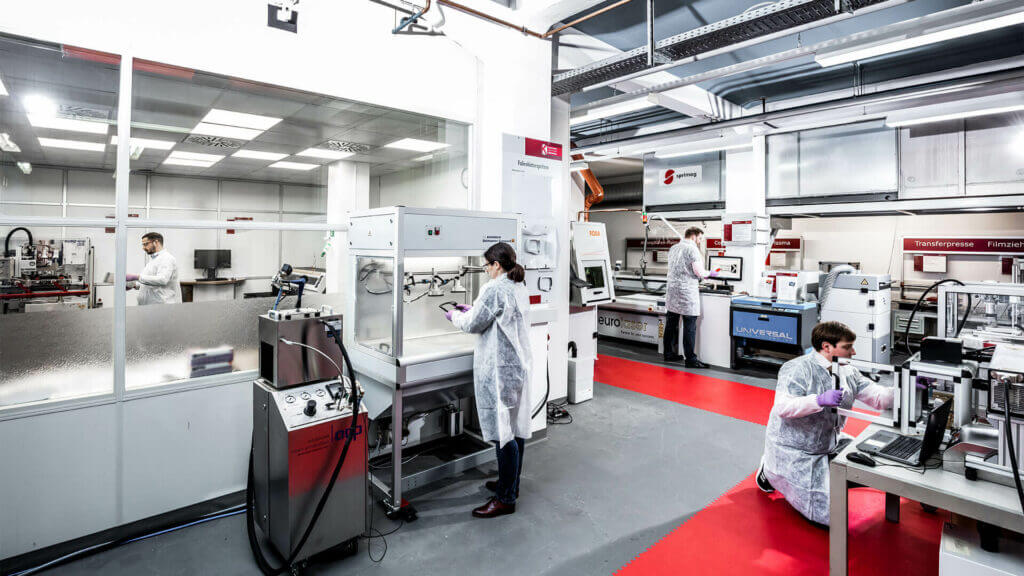
The research center at the Plastics Institute in Lüdenscheid has been a renowned partner to industry for decades. They trust products from our company, which are processed in Germany and delivered in top quality.
Inquire now -
fast, easy, reliable
You are welcome to send us your inquiry directly using the form.
We will get back to you as soon as possible!
Gemeinnützige KIMW Forschungs-GmbH
Phone: +49 2351 1064-139
E-Mail: mumme@kimw.de
FAQ
What role do organometallic precursors play in applied research at KIMW?
What are molybdenum hexacarbonyl and tungsten hexacarbonyl?
Molybdenum hexacarbonyl and tungsten hexacarbonyl are high-purity organometallic compounds (99.9% purity) used as precursors in CVD and ALD processes. Due to their defined thermal decomposition, they enable the reproducible deposition of molybdenum and tungsten layers with controlled film thickness, high density, and homogeneous composition.
Why are these materials relevant to toolmaking?
Thin functional coatings make it possible to tailor the properties of tool surfaces specifically to the application at hand. Metallic coating systems based on molybdenum or tungsten are used to increase wear resistance, improve temperature stability, and serve as diffusion barriers. The goal of the development of functional coatings by the non-profit KIMW Forschungs-GmbH is to increase service life, make processes more stable, and open up new fields of application for tools.
In which coating processes are the precursors used?
It is used in thermally activated gas-phase processes such as chemical vapor deposition (CVD). These processes enable conformal coating even on complex geometries and internal structures, making them particularly important for demanding tooling applications.
What are the benefits for industry partners?
By combining state-of-the-art plant technology, analytical methods, and process expertise, KIMW Forschungs-GmbH is able to develop and evaluate coating systems in a targeted manner. Companies benefit from:
- reliable data on coating performance
- optimized process parameters
- shorter development times
- scalable solutions for industrial manufacturing
In this way, research conducted in-house is effectively translated into applicable technologies.
What are the distinctive properties of molybdenum and tungsten coatings?
Coatings based on these metals exhibit high thermal stability, good mechanical strength, and defined electrical and thermal conductivity. They are suitable for use as functional coatings in high-stress environments and can be specifically integrated into multilayer systems.
What role does the precursor play in the coating process?
High chemical purity is crucial for reproducible results. It has a significant impact on film growth, microstructure, adhesion, and the functional properties of the film. In the context of research, these relationships are systematically analyzed in order to develop stable and transferable processes. The precursors purified by Gemeinnützige KIMW Forschungs-GmbH have a purity of 99.9%.
How are the processes monitored analytically?
The development of coating systems is supported by comprehensive material and surface analysis. This involves examining, among other things, coating thickness, coating structure, chemical composition, topography, hardness, and tribological properties. Based on this information, processes can be specifically optimized and tailored to meet industrial requirements.
How is the technology transferred to industrial applications?
Our development process is consistently application- and product-oriented and is carried out in close collaboration with our industry partners. From the initial concept through process development to evaluation under real-world operating conditions, we create solutions that can be directly integrated into existing manufacturing environments and processes.
What are the prospects for future tool designs?
By using organometallic precursors, the non-profit KIMW Forschungs-GmbH is developing new coating architectures specifically designed to meet very high thermal, mechanical, and tribological requirements. This lays the foundation for high-performance, resource-efficient, and cost-effective tooling solutions.
What role do molybdenum hexacarbonyl and tungsten hexacarbonyl play in semiconductor technology?
In semiconductor technology, organometallic precursors such as molybdenum hexacarbonyl (CAS No. 13939-06-5) and tungsten hexacarbonyl (CAS No. 14040-11-0) are frequently used in gas-phase processes, particularly in methods such as chemical vapor deposition (CVD) or related coating technologies. They serve as a metal source for the controlled deposition of thin metallic layers on substrates.
These layers can be used, for example, as conductive contacts, diffusion barriers, or functional interlayers in microelectronic components. Due to their defined chemical structure and good vaporizability, these precursors enable precise process control and reproducible material properties, which are crucial for the fabrication of modern semiconductor structures.
How are these precursors used in chemical engineering?
In chemical engineering, organometallic compounds such as molybdenum hexacarbonyl (CAS No. 13939-06-5) and tungsten hexacarbonyl (CAS No. 14040-11-0) are used both for research purposes and in industrial development processes. Among other things, they serve as starting materials for metallic coatings, for the synthesis of metal-containing materials, or as intermediates in the production of special functional materials. Due to their clearly defined chemical properties, these compounds can be specifically integrated into process developments that require reproducible reaction conditions and high material purity.
What is the significance of organometallic precursors for catalytic processes?
Organometallic carbonyl compounds are frequently used as starting materials for the production of catalytically active materials. Molybdenum and tungsten compounds play an important role in many industrial catalysts, for example in oxidation, hydrogenation, or reforming reactions. Precursors such as molybdenum hexacarbonyl (CAS No. 13939-06-5) and tungsten hexacarbonyl (CAS No. 14040-11-0) enable the targeted incorporation of these metals into catalytic systems, thereby facilitating the development of high-performance and selective catalysts.
What are the applications in olefin production?
In the petrochemical industry, olefins are key raw materials for the production of numerous plastics and chemical products. Metal-based catalysts play a crucial role in the efficient conversion of feedstocks into olefins. Organometallic precursors such as molybdenum hexacarbonyl (CAS No. 13939-06-5) and tungsten hexacarbonyl (CAS No. 14040-11-0) can be used in the research and development of such catalysts, as they enable the precise introduction of transition metals such as molybdenum or tungsten into catalytic systems. This allows for the development of new catalyst materials and the further optimization of existing processes.
How are molybdenum hexacarbonyl and tungsten hexacarbonyl used in the aerospace industry?
The aerospace industry requires materials that can withstand extreme thermal, mechanical, and chemical stresses. Organometallic precursors can be used to produce highly durable metallic coatings, for example for components with increased requirements for wear resistance, temperature stability, or corrosion protection. Coating processes such as CVD allow precursors like molybdenum hexacarbonyl (CAS No. 13939-06-5) and tungsten hexacarbonyl (CAS No. 14040-11-0) to be used to create thin, uniform metal layers that improve the service life and performance of technical components.
Why are high-purity precursors particularly important for industrial applications?
The quality of the organometallic precursors used has a direct impact on the stability and reproducibility of industrial processes. High-purity compounds reduce the risk of undesirable side reactions, enable precise control of coating or synthesis processes, and help ensure consistent material properties. High purity of the starting materials is therefore of central importance, particularly in sensitive areas such as semiconductor manufacturing or catalyst development. The precursors purified by the non-profit KIMW Forschungs-GmbH have a purity of 99.9%.
Events
Alle Veranstaltungen-
15.10.2026
Workshop Prüfungsvorbereitung Verfahrensmechaniker
Lüdenscheid Seminar -
16.10.2026
Verfahrensmanager für Kunststoffverarbeitung (IHK) Modul 2
Lüdenscheid Lehrgang -
21.10.2026
Workshop Prüfungsvorbereitung Verfahrensmechaniker
Lüdenscheid Seminar -
22.10.2026
Spannungsrisse – Ursachen und Maßnahmen
Lüdenscheid Seminar -
28.10.2026
Spritzgießen für Konstrukteure + Werkzeugmacher
Villingen-Schwenningen Seminar